Was social media actually better in 2016?
Was social media actually better in 2016?When donuts, rainbows, dogs and, uh, random stuff made the grid
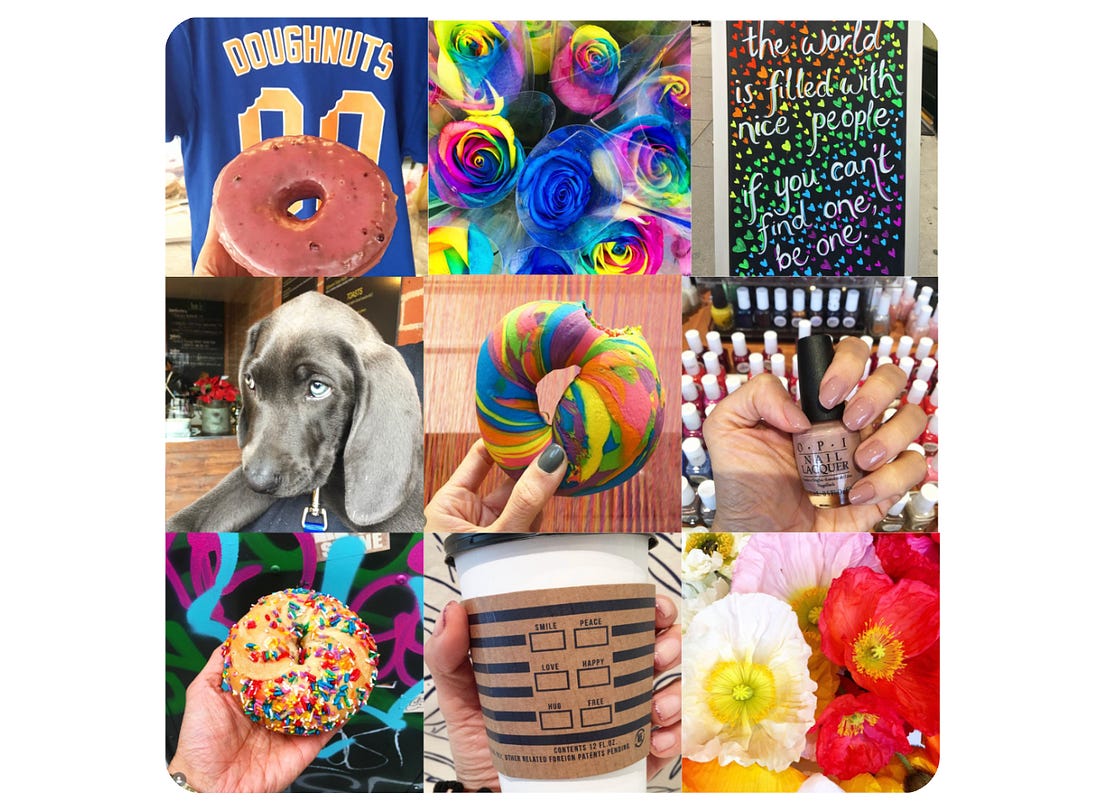
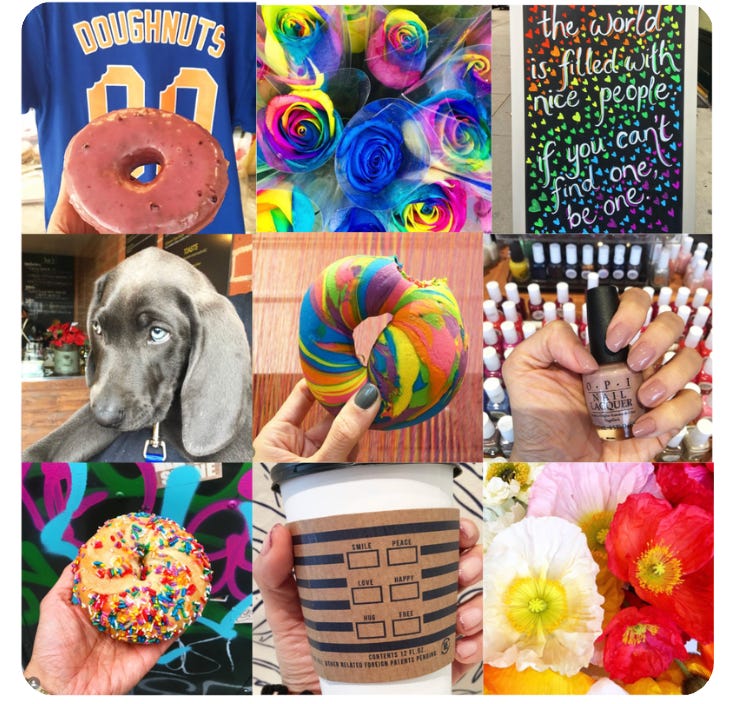
[individual images taken from Meta VP of Fashion Eva Chen’s 2016 grid] ⏰ 1-SECOND SUMMARY
💻 ROADMAP📲 TikTok Updates
Related TikTok News: 📲 Meta Updates
📲 YouTube Updates
Related YouTube News: 📲 LinkedIn Updates
📲 X Updates
Related X News: 📲 Spotify Updates
🔑 ONE BIG THING
Was 2016 Social Media Actually Better?I’m working on a project about nostalgia as a cultural force, so I asked some of my favorite social leads what they missed about working in social back in 2016. Their answers were so good — and really clarified how far we’ve come — that I decided to make it the theme of this week’s newsletter too. To be clear, 2016 wasn’t all sunshine and rainbows (even if we had technicolor grids). This isn’t one of those “everything was better in the old days” posts. There’s actually a lot of collective amnesia about the things that really sucked that year. “One of my brilliant colleagues, Ryan Briggs, recently did a presentation on 2016 nostalgia that did remind us that while we were actually living it the first time, we weren’t that thrilled about it,” Kate Bryant (Nintendo, 2016) told me. “The New York Times published 2016: Worst. Year. Ever? John Oliver said “2016 has been an uncommonly s---ty year” on Last Week Tonight.” The whole concept of yearning for the good old days is nothing new — even if you weren’t alive during that era and they weren’t actually good days. A survey from The Harris Poll on behalf of the Human Flourishing Lab revealed that 68% of Gen Z expressed nostalgia for eras before their lifetimes. Whether you’re nostalgic for 2016 or just curious about what it was like to work the front lines of social back then, here’s your answer: Kate Bryant, Nintendo 2016When I think of 2016, I primarily think of Twitter and Instagram which is where the majority of my professional time was spent, with YouTube, Facebook and a dash of Pinterest as well. In my head I associate 2016 with the golden era of corporate dank memes. Aesthetics were oftentimes quick and dirty to try and get content up as trends took off. I got 1,000 retweets of a picture of black curtain, because it was speaking directly to a forum that was in a tizzy over our booth at E3 that year. For me as a professional, I’m definitely nostalgic for a time when social media felt like we were all experiencing life together in real time. The decline of the monoculture has fractured the online experience and we’re having to look for niche trends with active audiences, instead of just throwing out HERE COME DAT BOI!!!! We were all spinning out, but in 2016 the internet made it feel like we were all spinning out together. Kate’s now Senior Social Product Marketing Manager at YouTube Josh Rangel, Golin 2016It felt as if we were still creating for a brand’s audience versus creating for other marketers. While the level of content social teams are creating has been turned up to 11 from a creativity standpoint, it seems like there’s an aspect of social in 2026 in which we’re playing to one-up other brands and social teams versus truly creating for your brand’s audience. It was a simpler time. No TikTok. No IG Stories. No UpScrolled. No expectation that you jump on every trend. Less chaos, more creating. Josh is now senior director, social at Ogilvy Angela Kim, Yahoo 2016I remember coordinating Instagram and Snapchat takeovers, obsessing over the IG grid aesthetic and watching influencer marketing take off. Filters were everywhere, from Snapchat’s puppy dog to Instagram’s Clarendon and Gingham. Twitter was our real-time pulse. It was the first place you went for breaking news, earthquakes, or live-event commentary. It felt like the world’s digital water cooler. It was also the year Instagram ditched chronological order, forcing social managers to rethink strategy. When I think back to 2016, it feels like a simpler time. Social media felt more playful and connective, filled with features that invited us to participate together. From the Mannequin Challenge to Pokémon Go, we weren’t just consuming content. It felt like we were making connections. Angela’s now a social strategy consultant Matt Navarra, The Next Web 2016Running social back then I recall spending most of my days supporting my team replying to angry tweets with sassy memes! Platform-wise... It was peak Instagram aesthetic. Avocado toast, marble backgrounds, overhead shots with VSCO filters. Grid curation was serious business. Facebook gave you (some) organic reach, so you’d spend hours crafting the perfect post, then watch it fly. Boosted posts felt like a cheat code, not a necessity. And Zuckerberg was begging us all to go live. Every brand was suddenly doing office tours and Q&As, and nobody had quite figured out if anyone was watching. Twitter was wild, but fun. You could still go viral with a sharp tweet and a bit of luck. Less algorithmic throttling of your reach, more feed chaos. And we also saw the rise of sassy brand voice. 2016 was the year social managers became comedians and customer service agents rolled into one. Now it’s all data dashboards, ROIs, and fighting for scraps of organic reach. Back then, you could tweet something dumb at 9am and be in a news article by lunchtime. It felt like anything was possible. Matt’s now the author of the Geekout Newsletter Jenny McCoy, Viacom 2016I remember being absolutely glued to Stories as they launched on Instagram. Stories took the pressure off the grid post and encouraged a more personality-driven type of content share. I actively used Snapchat even though I had only a handful of personal friends (mostly from work) on the platform, because they had the most fun filters and I could easily play with those and Bitmojis to make silly content that I’d share with my actual friend network on Instagram. Twitter was still Twitter and I loved Twitter. The perfect Instagram grid pic still had value. We all knew it was a little silly, but it was a fun challenge especially if you worked in social media anyway. Jenny’s now the founder of goodhelp Diana Scholl, ACLU 2016I think of Twitter and snark. Posting everything on the Instagram feed. I think of weirdo millennials who hung out on Tumblr and were now getting paid by brands to bring that aesthetic mainstream. #TheDress exemplifies this era. It became a meme (in 2015) after Cates Holderness posted it on Buzzfeed’s Tumblr. #TheDress started my social career because I was a general communications strategist at the ACLU at the time and I encouraged the ACLU to participate in the trend. It went really well, and led to my promotion to social media manager in 2016 because I was seen as someone who had the pulse of the internet. Social media felt fun and experimental and weird then. People could make friends on Twitter. The form was also still evolving and we were making things up as we went. In 2016 I started screenshotting tweets for ACLU’s Instagram and it was groundbreaking! Most people who worked in social were operating in a corner with little oversight because we were some of the only people at our companies and organizations that understood its power, and we didn’t always quite understand its power either. Diana’s now a digital strategy consultant 2016 vs 2026So, was social better back in the day? “We’re all nostalgic for 2016 because it was the last era before social became corporate. Before content became “assets” and creators became “influencer partners,” opined Matt, adding, “I miss the chaos.” Fair point. But with social becoming a corporate job function — rather than something “the intern” or Tumblr weirdos do — there’s now an expectation of professionalism. Better boundaries. More support. Improved tools. “I worked SO much in 2016,” Diana told me. And here’s the truth: when everything felt possible, the demands of working in social were endless. There were no playbooks and no appreciation of how much work it took to run social accounts. We’ve also seen big improvements to platform features and functionality. “Democratizing live video was arguably the biggest function implemented by social media platforms,” said Vincent Orleck (current Marketing Manager at Canyon GBS, 2016 social media director at Plexus Worldwide), “and that was a result of platforms like Meerkat and Periscope exploding as accessible live video options.” It’s also never been easier as a creator to monetize your output on the platforms. Creator funds didn’t exist in 2016, unless you were in the YouTube partner program. Maybe it isn’t about better or worse — it's just different. We traded chaos for careers. 2016 social was messy, exhausting and optimistic. It felt like anything could happen. Now we have improved tools and clearer strategies, plus a generation that sees the downsides of doomscrolling and demands better work-life boundaries. And if you’re craving that 2016 energy, it’s less about recreating an aesthetic and more about adopting a mindset that resists the urge to optimize everything for performance.
I’d love to hear your thoughts. Please let me know in the comments what’s informing your perception of social these days — whether positive or negative. 🏈 SUPER BOWL LX WATCHHere are some of the creators, platform partnerships, and second-screen experiences you can expect to see during the Super Bowl LX — or as Jerry Won referred to it, the Bad Bunny concert preshow and postshow.
👀 ICYMI: JUST THE HEADLINES
💌 PLEASE SUPPORT ICYMIIf you liked this post, please repost, give it a ❤️︎ or leave a comment. It helps and it costs $0.00. You're currently a free subscriber to ICYMI by Lia Haberman. For the full experience, upgrade your subscription.
|