You Should Never Go Viral With Your AI App
 You Should Never Go Viral With Your AI AppIn the agent-native era, growth follows different rules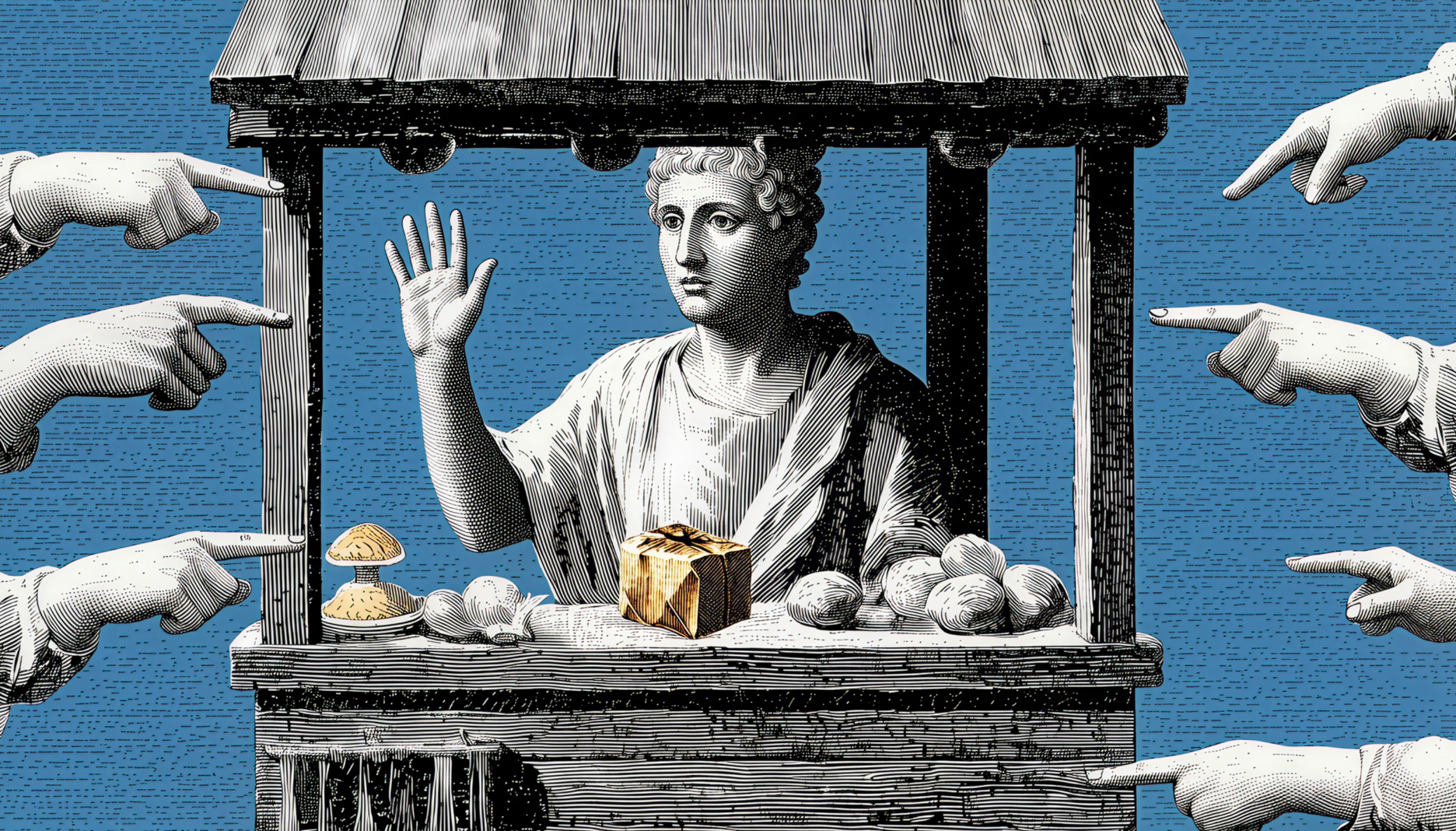 Victor Stepanov does growth marketing at Every and has spent years building audiences at Netflix and BuzzFeed. He understands the seductive pull of virality, and why AI founders should resist it. In this piece, he argues that for AI products, sudden viral growth starves the feedback loops that make them better and chases away the very users that matter most. His three rules of "boring" growth—don't overpromise, build in public, and talk to users constantly—offer a counterintuitive playbook for building an enduring business.—Kate Lee Was this newsletter forwarded to you? Sign up to get it in your inbox. If you're building an AI product, I hope you never go viral with it. I hope you never feel the surge of thousands of new signups overnight, the rush of rocketing up Apple's App Store downloads chart, the unmistakable jolt after your launch post blows up on TikTok or clocks a million impressions on X. As counterintuitive as it sounds, if you're building an AI product—especially an agent-native one, where an AI agent in the app can do anything that a human user can do—obscurity can be a hidden advantage, the quiet space where the shape of the product emerges, your best shot at finding true product-market fit. I come from the mobile app world, but I've also spent years doing social media and marketing at companies like Netflix and BuzzFeed. In entertainment, the entire business depends on winning the attention game over and over again. If people aren't watching or reading, nothing else matters. Today, that belief seems to be everywhere. My X feed is full of people explaining how to make your app go viral. The promise is that if a product gets attention quickly, the rest will sort itself out. That mindset is powerful. It treats attention as proof and reach as validation. While that works in entertainment, where the product is the content, we've seen prominent examples in tech of how sudden, unexpected growth can backfire. This is an even greater risk with AI products, which reveal and even increase their value through repeated interaction. They need the same users to return again and again—enough for the AI model or agent to learn them and vice versa. When a surge of one-time users arrives and quickly abandons, the churn starves the system of the feedback loops it needs to improve. So what kind of marketing helps AI products succeed? It's not really glamorous, and might even seem boring. If instead of reach, AI products thrive on retention and depth of relationship, then your growth strategy has to do the same. It comes down to a few practices that feel almost too simple but work because they compound over time, in the same way your product (hopefully) does. The rules of 'boring' growth1. Don't overpromiseA lot of viral growth playbooks start with the same directive: Make your product look as magical as possible. Cut out all the struggle and show the most extreme transformation, an instant life upgrade. Some apps go so far in this direction that they design their core workflows to look amazing on TikTok. That approach works great if your only goal is to get people to tap "Download." Flashy product demos inevitably showcase a narrow interaction and a specific use case. This fits traditional apps like Slack and TikTok, which have a set of core flows and success is about repetition. But AI apps, especially agent-native ones, tend to be non-linear, unpredictable, and sometimes have a virtually infinite number of use cases. Instead of a strict recipe of pre-defined instructions to follow, these apps are more like a kitchen stocked with tools that AI agents can use to make your requested dish. For every instance of magic there might be countless others that feel completely mundane—and cause people to quickly bail. So your marketing has to do almost the opposite of what the viral playbooks say. You don't want to show one most impressive thing. You want to show the boring but recognizable moments potential customers experience every day. If you're building an AI writing assistant, you don't show a perfectly polished article generated on the first try. You show the blank page. You explain the writing principles behind your prompts. You work with the "I don't know where to start" feeling your audience has and slowly guide them to writing their first paragraph with the agent's help. What you're really optimizing for here isn't a single "wow" moment but a series of small "aha"s. Ideally all your growth efforts would empower users to discover what Every cofounder and CEO Dan Shipper calls "emergent capabilities"—things the product can accomplish for the user that weren't explicitly defined by the developer. 2. Build in publicRepetition is one of the oldest rules in marketing. People rarely act the first time they see something. They need to trip over your product enough times to recognize it, trust it, and place it in the context of their lives. That's why the best time to start talking about your product is while you're building it... Become a paid subscriber to Every to unlock this piece and learn about:
 What is included in a subscription?Daily insights from AI pioneers + early access to powerful AI tools  Front-row access to the future of AI Front-row access to the future of AI  In-depth reviews of new models on release day Playbooks and guides for putting AI to work Prompts and use cases for builders In-depth reviews of new models on release day Playbooks and guides for putting AI to work Prompts and use cases for builders  Bundle of AI software Bundle of AI software  Sparkle: Organize your Mac with AI Sparkle: Organize your Mac with AI  Cora: The most human way to do email Cora: The most human way to do email  Spiral: Repurpose your content endlessly Spiral: Repurpose your content endlessly  Monologue: Effortless voice dictation for your Mac Monologue: Effortless voice dictation for your Mac |