ICYMI: If You Still Need to Prove Organic Social Matters, Start Here

ICYMI: If You Still Need to Prove Organic Social Matters, Start HerePlus, LinkedIn’s AI slop crackdown
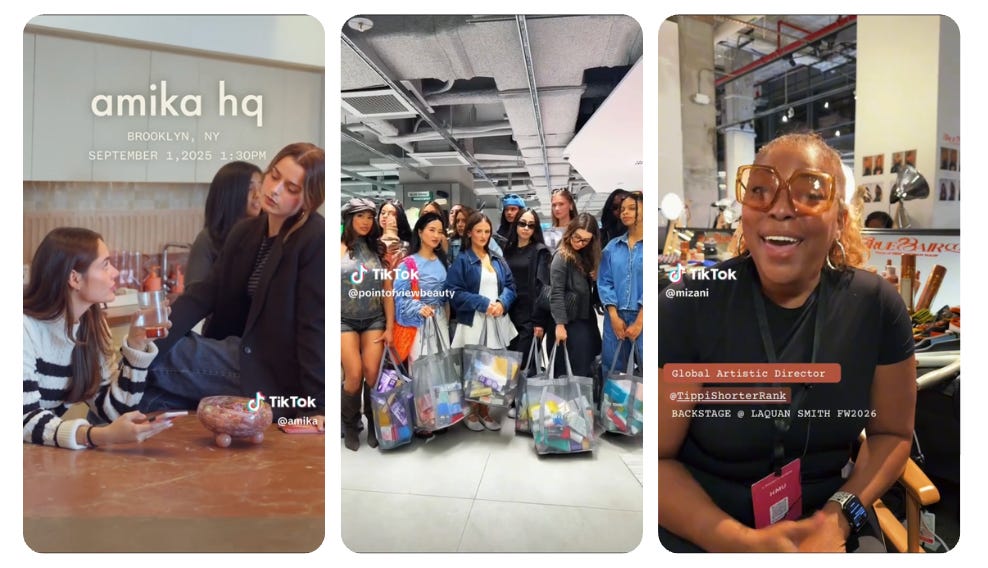
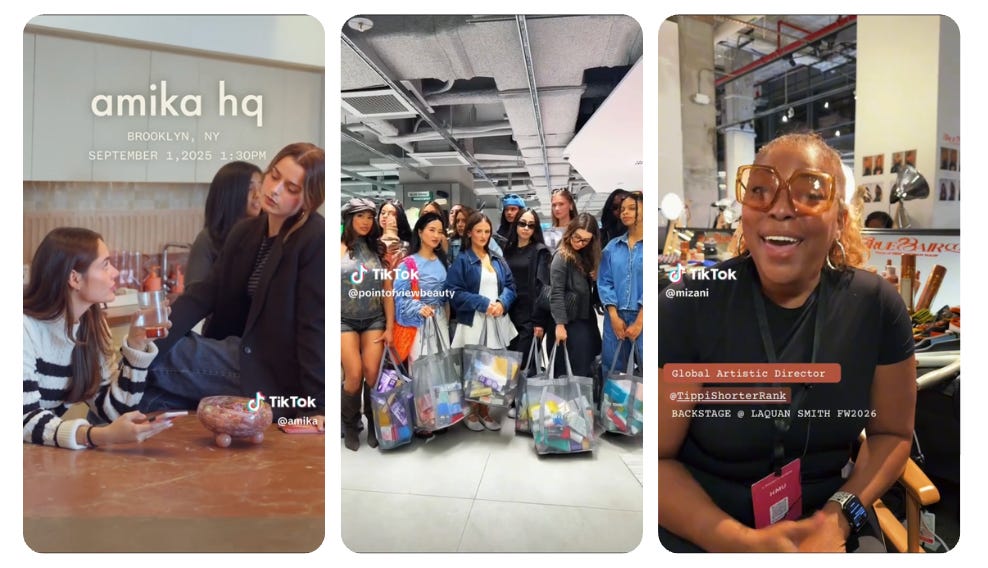
[From TikTok: Amika, POV Beauty and Mizani] ⏰ 1-SECOND SUMMARY
💻 ROADMAP📲 LinkedIn UpdatesLinkedIn is cracking down on “AI slop” — described as low-effort, AI-generated content. The company says a combination of technology systems and human oversight will be used to identify content that adds perspective, context, or expertise versus content that feels generic or repetitive. Another red flag: comments posted via automation tools and replies that parrot the original post without adding anything new. To make room for more thoughtful contributions LinkedIn editorial VP Laura Lorenzetti says content identified as generic is less likely to be widely distributed beyond a person’s immediate network. So far, LinkedIn says it’s correctly identified generic content 94% of the time. It’s a well-timed move. College grads are booing commencement speakers’ mentions of AI. Brands are bragging about not using AI in their social posts. Clearly, LinkedIn (owned by Microsoft) isn’t turning its back on AI — if anything, it’s likely using AI to clean up AI slop. But going after “slop” is an easy win and the comments on Lorenzetti’s post reflect that. “Preach!” “This is amazing.” Even fellow LinkedIn employees are posting “Humans FTW!” For this week, at least, it’s: Humans 1, AI 0. Related LinkedIn News:📲 YouTube + Google Updates
Related YouTube News:📲 Instagram + Faceook Updates
Related Meta News:
📲 TikTok Updates
Related TikTok News:📲 Pinterest Updates
📲 Snapchat Updates
📲 X Updates
📲 Twitch Updates
📲 LTK Updates
📲 Spotify Updates
📲 Substack Updates
🔑 ONE BIG THINGOrganic Social Is the Engagement MVP
Paid social offers predictable performance — at a cost. But for anyone who actually works in this space, organic is the thing that builds brand identity, community, and long-term loyalty. And yet marketing teams are still being asked to justify why brands should bother with organic. In 2026. Now there’s some data to settle the debate. (Go ahead and screenshot this to share in Slack or Teams) Organic content significantly outperforms boosted posts on TikTok when it comes to engagement, according to new research from Emplifi — which analyzed more than 17K TikTok videos across 200 beauty brand accounts.
There’s also a discovery gap. As organic videos gain traction, they increasingly reach first-time viewers. Boosted content, by contrast, tends to be served to people who already know the brand. “Organic creates the connection. Paid helps scale it,” Emplifi CMO Susan Ganeshan told me. “Brands saw the strongest results when organic and paid worked together — not when they treated them as separate strategies. Paid media can accelerate action, but organic content and UGC are often what build the confidence to convert in the first place.” This dynamic is showing up everywhere right now. Scroll through today’s ICYMI — the backlash against the sea-of-sameness AI slop, Google‘s shopping push — and one thing is clear: the concept of brand is one of the few remaining moats. And a steady flow of organic content is how that moat gets built. “Simply put: paid social drives sales, organic social builds legacy,” said Stacey Levine, a brand marketing consultant for clients like Ulta Beauty and L’Oréal Paris. “Organic gives brands a chance to tell their story in the exact way they want the consumer to receive it, and go deeper on education, emotion, and world-building.” Because people don’t trust ads the same way they trust unvarnished storytelling. Or creator-led content; or the comments section; or always-on, lo-fi content versus big, one-and-done moments. Sometimes, it’s as simple — and as strategic — as sharing real-time, behind-the-scenes moments, according to Saba Bokhari, who leads brand and consumer engagement for Pureology, Mizani, and L’Oréal Technique. “Whether it’s capturing what our brand world looks like at a major retail activation or creator dinner, or educating on the sensorial story behind a new hair fragrance launch (and sourcing fresh bergamots for that), organic is a key storytelling lever.” And the bar has only gotten higher. “What leadership teams sometimes miss is that social platforms are no longer just competing against other brands,” said Katie King, Director of Social Media and Influencer Marketing, POV Beauty. “They’re competing against entertainment platforms. TikTok is competing with Netflix for attention. That changes the expectation of what brand content needs to be.” At POV Beauty — a founder-led company built by creator-turned-entrepreneur Mikayla Nogueira — the emphasis is on content that connects. “There’s a deep understanding internally at POV of what audiences respond to, what feels authentic, and what creates real connection versus content that simply feels promotional.” And while the Emplifi data focuses on TikTok beauty brands, Ganeshan sees the performance patterns as much broader: “I do think these patterns extend beyond beauty, especially in categories where trust, identity, and peer influence matter,” she told me. “We’re seeing similar behaviors in categories like fashion, wellness, travel, and food, industries where consumers want inspiration and authenticity alongside advertising.” The cross-platform implications track too. Consumers move across channels throughout the buying journey, which is why it’s just as important to tell strong stories through organic social content on Instagram and YouTube as it is on TikTok. 💡💄 BONUS ROUNDTo go deeper, I asked a few beauty social leaders how they approach organic today: “Each of our brands, though distinct, are built on the product proof and community that organic social fosters so well. Organic content is the storytelling avenue, the news bulletin and hub for our superfans — be it stylists, derms or beauty lovers alike. In the time of TikTok Shop and affiliate everything, organic content is what people come to social for. That discovery mindset and desire to be entertained is ripe for creators and brands willing to let loose and behave like creators.” - Emily-Jean McDonagh, Director of Brand Marketing at Bansk Beauty (home to amika, Byoma, Eva NYC and Ethique)“Organic content is critical for us. It’s how we communicate our brand’s world in a way that’s truly ownable: our point of difference, our expression, our product knowledge. It’s something we’re thinking about even in the earliest planning stages for future launches, not just what’s dropping now. For smaller brands especially, ad spend might be a bit tighter, so organic social and influencer marketing have to work that much harder. Having been in this space for over a decade, one of the most meaningful shifts I’ve seen is how prominent organic social has become in retailer conversations. It finally has a real seat at the table. It’s a core part of go-to-market now, not an afterthought. And it’s always made sense to me: this is where consumers discover new products and brands. Of COURSE we should be there.” - Saba Bokhari, US Brand and Consumer Engagement Lead at Pureology, Mizani, and L’Oreal Technique“At this point, organic social is not a ‘nice to have.’ It’s one of the most important parts of the modern marketing ecosystem, especially in beauty. It’s often the very first touchpoint consumers have with a brand, product, founder, or community. Before someone ever clicks ‘add to cart,’ they’re usually discovering a brand through content that made them feel something first. Launching a brand today without a strong organic social strategy would be like opening a flagship store and forgetting to turn the lights on. Organic social allows brands to meet potential customers where they’re already spending their time. The ask is low, discovery feels natural, and the relationship can start building long before someone is ready to purchase.” - Katie King, Director of Social Media and Influencer Marketing, POV Beauty“As a marketing consultant in the beauty space, I’ve found that larger, established brands typically have an easier time investing in organic social compared to early-stage beauty brands. This isn’t a hard and fast rule, of course – but I’ve worked with clients who are so focused on performance and every dollar yielding sales, that it requires defending not just organic social, but brand building as well. Organic social content that promotes products and promos can be easier for leadership at these brands to get behind, whereas brand-building content, especially when it requires an investment to produce, can be harder for them to approve.” - Stacey Levine, Brand Marketing Consultant for clients like Ulta Beauty and L’Oréal Paris*interviews lightly edited for length 👀 ICYMI: JUST THE HEADLINES
Random notes from me: New column idea: Dumb stuff tech leaders say? Eg. Elon Musk: “Instagram is for girls,” and Mark Zuckerberg (allegedly, before terminating smart people): AI “learns from watching really smart people do things.” Also I happened to like Spotify’s anniversary glitter ball avatar 🤷🏼♀️🪩 looks like other brands did too. Finally, here’s wishing everyone in the U.S. a peaceful Memorial Day weekend. Thanks for reading! You're currently a free subscriber to ICYMI by Lia Haberman. For the full experience, upgrade your subscription.
|