Notes: It’s almost American Thanksgiving 🍁 so there won’t be a newsletter next Friday but I will send the monthly recap for paid subscribers. Plus, there will be a special newsletter about nonprofit social coming out on Monday, Dec. 1st!
On Dec. 2nd I’ll be celebrating ICYMI’s fifth anniversary by catching up with Rare Beauty’s Substack editor MacKenzie Kassab.
Then on December 11th, I’ll moderate a panel with Sprout Social, Coco Mocoe and IKEA — come watch me fan girl over the history of IKEA’s meatball campaign.
As for this week, we’re hating on gift guides for some reason, there are already complaints about the quarter-zip trend, and Keith Lee teamed up with Amex to promote Small Business Saturday.
TikTok will let you control how much AI content you see in the FYP
TikTok announced Bulletin Boards — its version of Broadcast Channels
YouTube is testing DMs, which they say has been a top feature request
YouTube hosted a creator-led, film-festival-style showcase for “key decision makers”
Instagram now allows for 20 minute Reels
Threads is working overtime to be a destination for podcast creators and communities
A former Twitter employee is relaunching Vine as Divine
IAB Report: U.S. creator ad spend is growing 400% faster than the rest of digital media
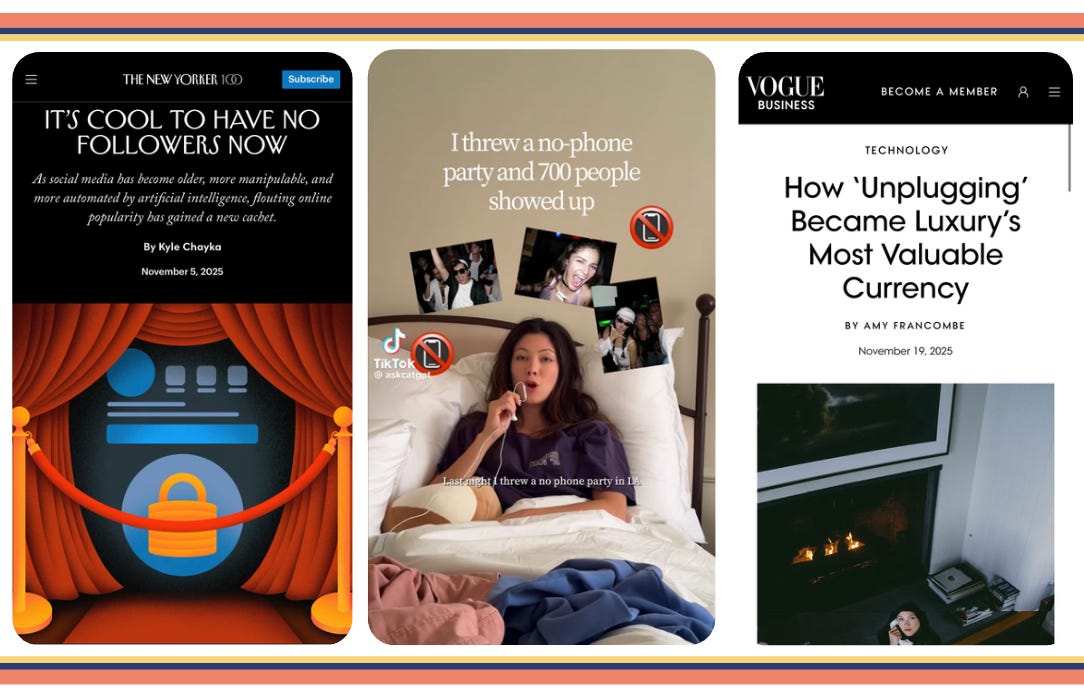
Welcome to the era of Slow Social; we’re logging on more intentionally
YouTube hosted its first-ever ‘Creator Premieres’ — a film-festival-style showcase last week for an audience of “key decision makers” from major brands and agencies like Verizon, LVMH, WPP, Omnicom Group, Dentsu and more. The event featured sneak peeks and programming announcements from creators, including Cleo Abram, Ms. Rachel, Mark Vins, and Trevor Noah — each unveiling new episodes, series, documentaries, specials or even a late-night show. Recess Therapy’s Julian Shapiro-Barnum will host Outside Tonight, a weekly late-night series taped in New York.
TikTok officially announced Bulletin Boards — a Broadcast Channel dupe. It’s available to creators who are at least 18 years old and have 50,000 followers. (This was first spotted in June.)
TikTok announced a new Time and Well-being space to build mindful digital habits, which include an affirmational journal, a soothing sound generator, and badges for missions accomplished.
TikTok partnered with iHeart Radio to launch a creator podcast network, which will feature up to 25 new podcasts hosted by TikTok creators, as well as a national broadcast and digital radio station, and live events.
A new TikTok and Amazon partnership means Amazon Music customers can share songs, albums, playlists, and personal listening highlights from their Insights on Amazon Music directly to TikTok.
Instagram’s Design team announced you can post Reels that are up to 20 minutes long.
Threads said it’s giving podcast links in the feed a more pronounced look, with colorful backgrounds and image thumbnails, making them easier to spot. And creators will be able to add a link to their podcast in their profile. It’s part of an effort to become THE place for discussions around podcast shows.
Meta is rolling out updates to its computer vision model that can identify, outline, and follow objects across both images and video. That means new Edits effects creators can use on specific people or objects in their videos.
Snapchat announced Topic Chats, public conversations around everything from F1 to Below Deck — coming soon in Canada, New Zealand, and the US. Topic Chats will cluster Snaps about a topic and will let you see if your friends are in the Topic Chats exploring common interests.
We’re in our slow social era. It’s a broad idea capturing our collective fatigue — the doomscrolling, the avalanche of AI slop, the realization that trend-jacking doesn’t hit the same when every brand is posting the same orange-glitter moment.
I wrote about Gen Z’s desire for a digital detox back in June — at the time searches for the term were spiking as people were expressing digital fatigue — but, as Vogue noted in this new article about the luxury of unplugging, the past six months have marked a tipping point.
You can see it in a string of think pieces published this week:
And you can see it in cultural trends, like the New Yorker article circulating that says it’s cool to have no followers now; the popularity of Brick, a device which blocks addictive apps on your phone to help you focus, and the rise of IRL events, especially those where devices are banned — everywhere from the Met Gala to TikTok creator CatGPT’s no-phone party.
But… you’re the social team, which means going offline isn’t an option.
This is a theme I’ll keep digging into — it’s not a one-post problem — but across all these conversations, the message is clear: depth over breadth in 2026.
Post less, but make the posts count.
Experiment with long-form content that holds people’s attention.
Create spaces — especially offline spaces — to connect with the people who love your brand.
Embrace printed materials, tactile retail experiences, and ritual-based packaging as an antidote to digital burnout.
We’re not logging off completely — we’re just showing up more intentionally.
And the final, pragmatic word on this goes to senior social manager Carmen Vicente, who posted about it perfectly: tech is smart and will adapt. People might spend more time on analog activities in 2026, but platforms will shift to support those hobbies in any way they can.
In 2026, we may be doing more painting, knitting, journaling, and dinner parties, said Carmen. “But my guess is we’ll be planning and mapping and documenting it online.”
Share
Waiting in line for designer sample sales and pop-up shops has become a status symbol for young consumers, according to Vogue Business’ follow up piece: Gen Z Broke the Marketing Funnel, Part II — What Now? Seventy per cent of Gen Zs say they’re very or somewhat interested in attending in‑person brand events or activations. And of the Gen Zs who have attended an in‑person brand event or activation, nearly three‑quarters (72 per cent) report that the experience made them view the brand more positively.
Brand partnerships are the main revenue driver for creators with 94% of creators surveyed saying they post on behalf of brand partnerships at least once a month. This disproportionate reliance on brand deals can make revenue hard to predict which is why creators are trying to diversify their revenue streams, according to Visa’s Monetized: 2025 Creator Report.
U.S. creator ad spend is projected to reach $37b in 2025, with an annual growth rate of 26%YoY. That’s 400% faster than the rest of digital media is growing, according to the IAB’s 2025 Creator Economy Ad Spend & Strategy Report. Creator reputation and audience alignment are the most important criteria brands use when selecting creators and finding the right creator to partner with is the top challenge listed.
Which online platforms do Americans most commonly use? - Pew Research Center
A former Twitter employee is relaunching Vine as Divine, including more than 100,000 archived Vine videos, restored from an older backup that was created before Vine’s shutdown - Tech Crunch
Does Kylie Jenner’s return to Snapchat signal a comeback — not just for her beauty brand, but for Snap Inc itself? - Vogue
Meta won’t have to break up with Instagram and WhatsApp after winning an antitrust suit - The Guardian
Fan edits, the distinct social media content format is peak fan expression, and it also helps entertainment brands like Lionsgate drive awareness about its properties - Marketing Brew
Cava, Starbucks and Figs are just some of the brands producing merch to reach Gen Z and millennial audiences who leverage exclusive brand accessories as a status symbol - AdAge
If you liked this post, please repost, give it a ❤️︎ or leave a comment. It helps and it costs $0.00.
If you’ve got the budget, you can Buy Me a Coffee or upgrade to a paid member subscription.
Or you can shop from my Bookshop.org or Amazon storefront for recommendations of the social and creator marketing books I’ve read recently.