Consumers are influencers too

Consumers are influencers tooWhy one brand built a campaign that's a "documentary of elevating the guest experience."
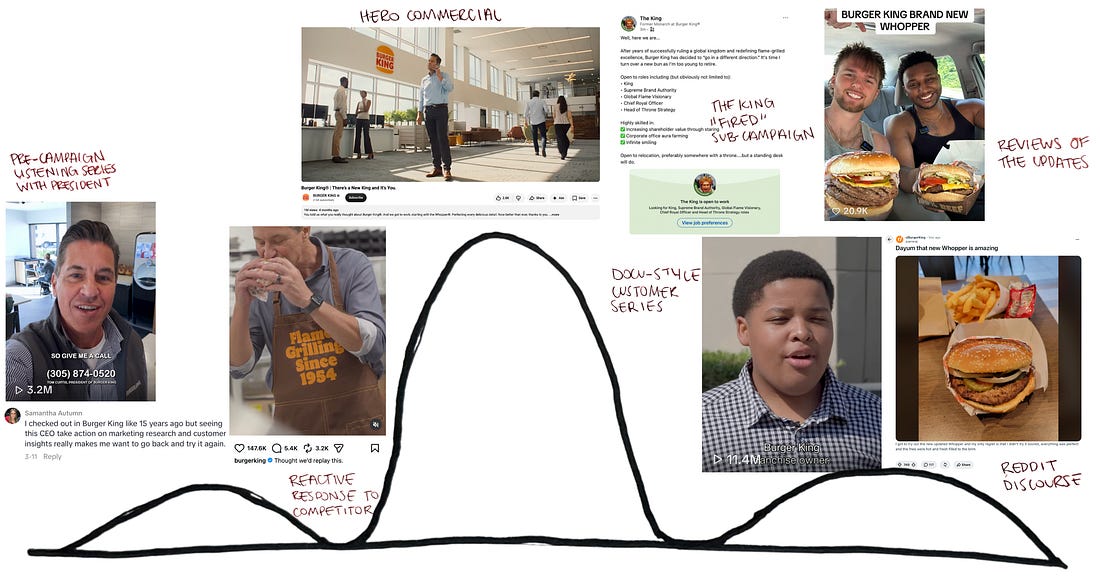
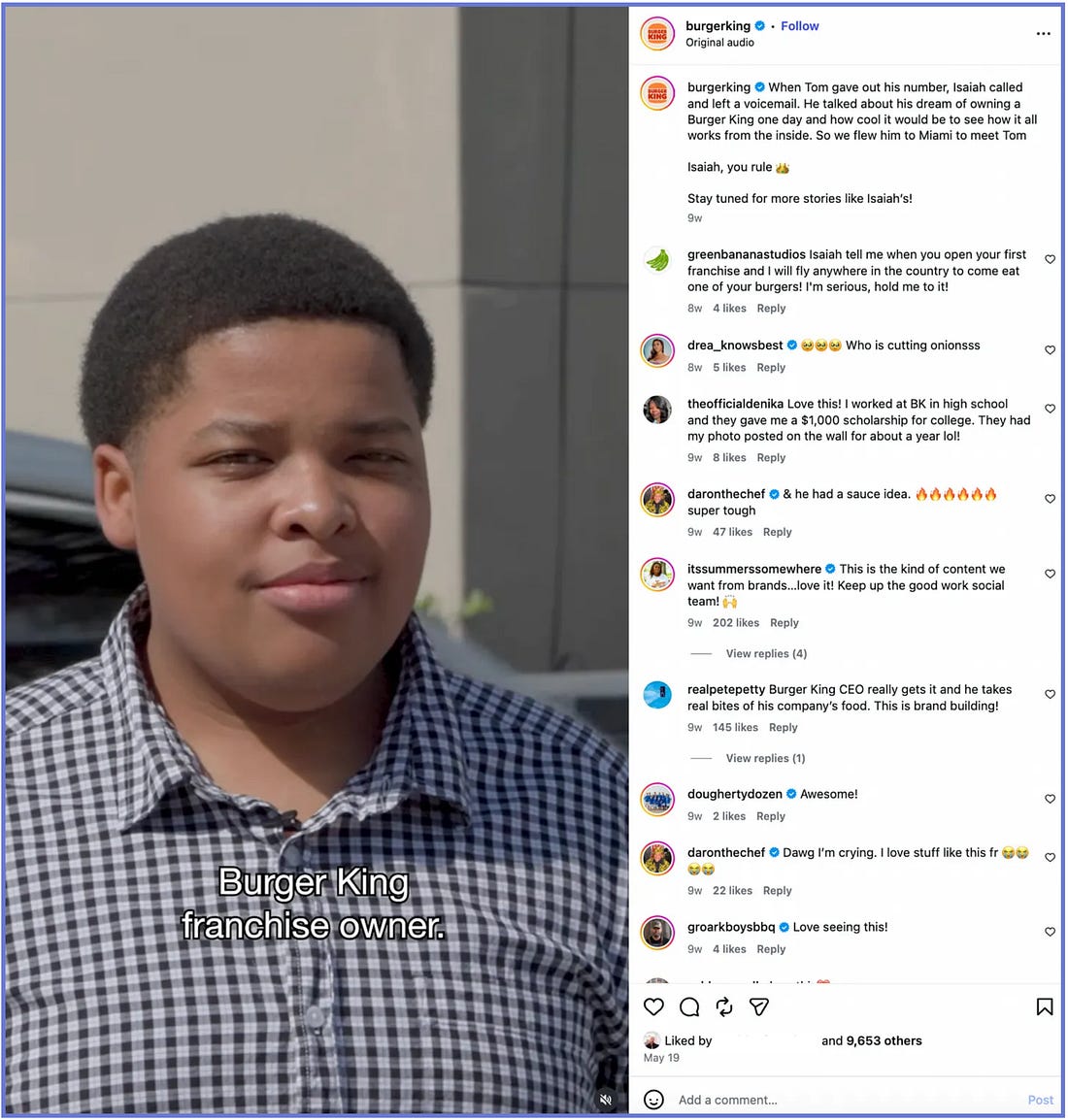
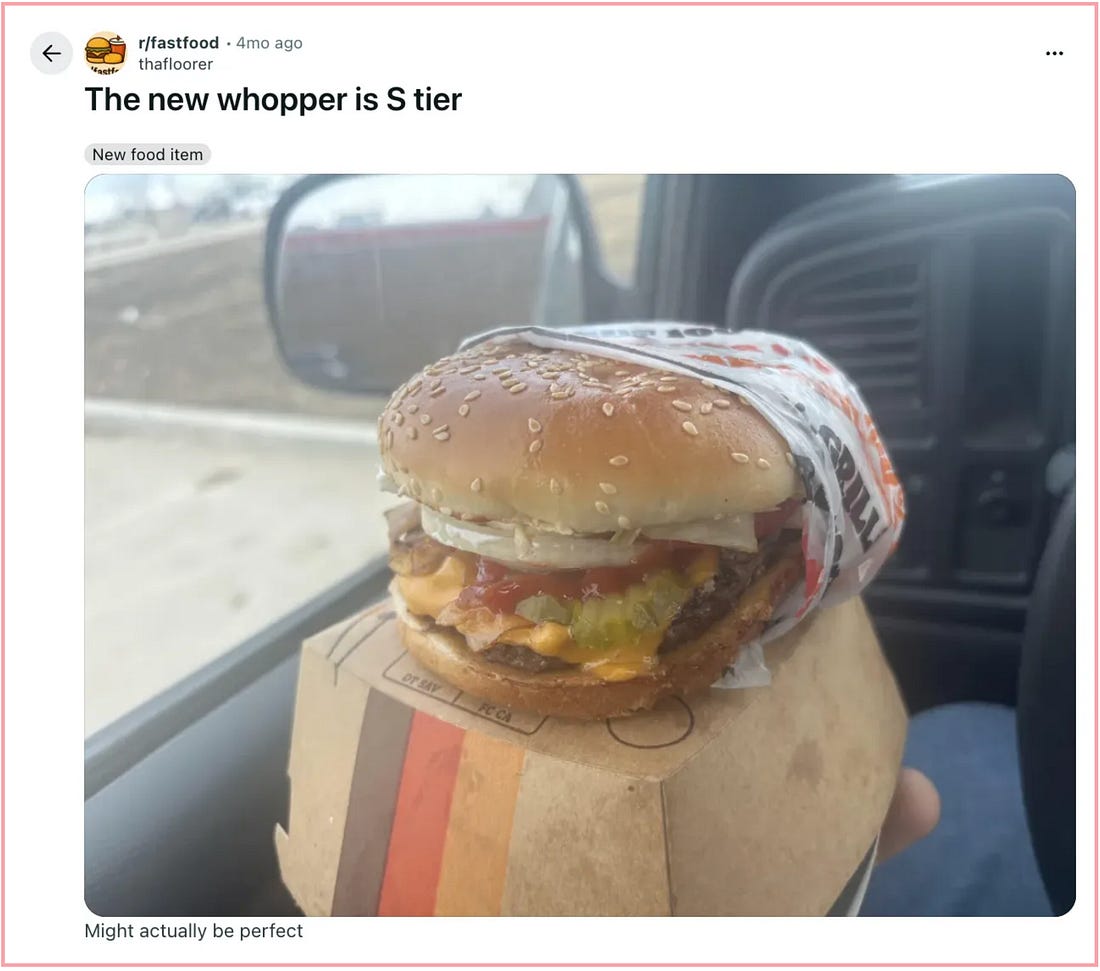
It’s been one month since Cannes Lions and I am still thinking about the case studies. When I try to pull a throughline for the ones that have stuck with me—Gap’s Better in Denim campaign with KATSEYE, Apple’s Neo rollout on TikTok, Burger King’s “There's A New King And It's You” declaration—it’s that they didn’t stop at the commercial. All of the brands found clever ways to pull the thread of the message through to organic social. Gap’s campaign included over 40 additional social media posts that helped bring it to life! The best campaigns right now realize that a hero asset isn’t enough. It’s a series of posts that create a pattern recognition. As Link in Bio contributor Matthew Stasoff put it in this essay, “As audiences stop consuming content in linear ways, brands will need to find ways to reach them in non-linear ways. Diverse touch points that find connection points. On-ramps bring people in—no matter where in the campaign rollout they tune in—and make them want to stay awhile.” Today I am talking with Mojo Supermarket, the agency that has been helping Burger King tell their “There’s A New King And It’s You” story on social media. Before the commercial even aired on March 15th, the brand was planting seeds online. They gave customers the president Tom’s phone number for feedback and documented it—this video got 100K likes. The audience was warmed up by the time the spot ran. Since then, the brand has been sharing docu-style customer spotlights (one commenter wrote, “This is the kind of content we want from brands…love it! Keep up the good work social team! 🙌”) and more videos with Tom, who has become a bit of an influencer himself. They even have impressed customers sharing the improved burger on Reddit.
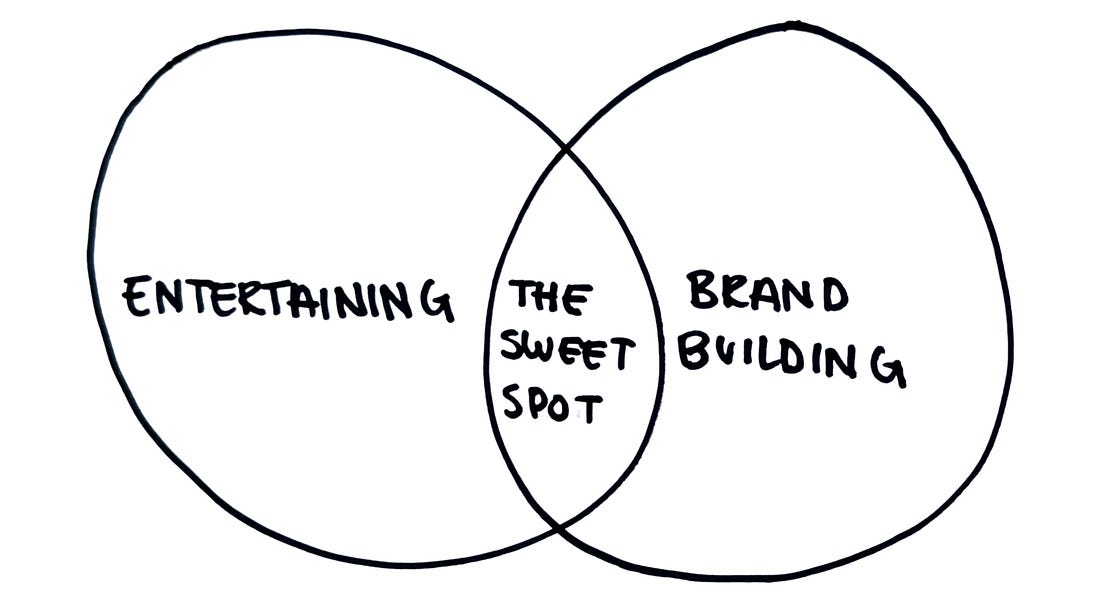
As social media has moved towards entertainment media, I’m seeing more brands try to gamify attention at all costs. But I think it’s important to make sure the thing you’re going viral for actually serves your brand and your audience. It’s easy to lose sight of that. Burger King’s campaign feels about as close as you can get to the middle of the venn diagram between “entertaining” and “brand building”. The proof is in the numbers. According to Marketing Dive, “Burger King U.S. in Q1 saw comparable sales grow 5.8%, outpacing RBI sales growth of 3.2% and reversing a 1.1% decline during the same period in 2025”.
Below I talk to Mo Said, founder and creative director of Mojo Supermarket, about why too many campaigns are based on a “fantastical reality”, how to build a reactive social process, and the role listening plays in the creative process. Rachel Karten: First, can you tell me a little bit about yourself and Mojo Supermarket? Mo Said: Mojo Supermarket is a creative agency that builds big brands on the internet. I used to work at big brand creative agencies that didn’t understand social, and social agencies that didn’t understand brand building. So we built something in the middle. Currently we’re the social AOR for TikTok, Burger King, we’re running the Doordash World Cup campaign, etc. Rachel: I just got back from Cannes Lions, where I enjoyed reading the case study of the “There’s A New King and It’s You” Burger King campaign. Your agency has specifically been helping bring it to life on social media. Can you take me into your process for translating a big, overarching campaign into actually-engaging social moments? Mo: When we joined the team, Burger King and their creative agency BarkleyOKRP were getting ready to execute a campaign that put guests at the center of the brand. But it was more than a campaign—they were focused on actually listening to the guests, improving the product and experience, and then telling the story of that. They described it as a potentially yearslong documentary of elevating the guest experience. And we thought that’s a pretty great strategy to take to social. 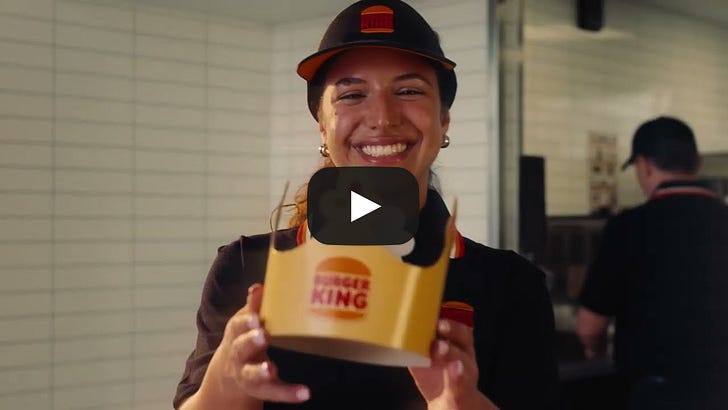
To kick off the campaign, Tom, the President of Buger King, was going to give out his phone number and take calls from real Americans. Listen to them. Get their feedback. We all thought…how many calls is he possibly going to take, you know? But Tom exceeded everyone’s expectations. He was taking phone calls on his commute, on his lunch break, on nights and weekends. He cares so much. So we were like okay, we’ve got hundreds of phone calls. And a lot of them were pretty like…real. A guy passes by a Burger King on his way home, and the sign is broken. A kid who wants to one day own a franchise. A bunch of people who said the fries aren’t hot enough. And Tom genuinely wants to do something about all of those, not for content but because it’s the right thing. And what you’re seeing is the documentary of that.
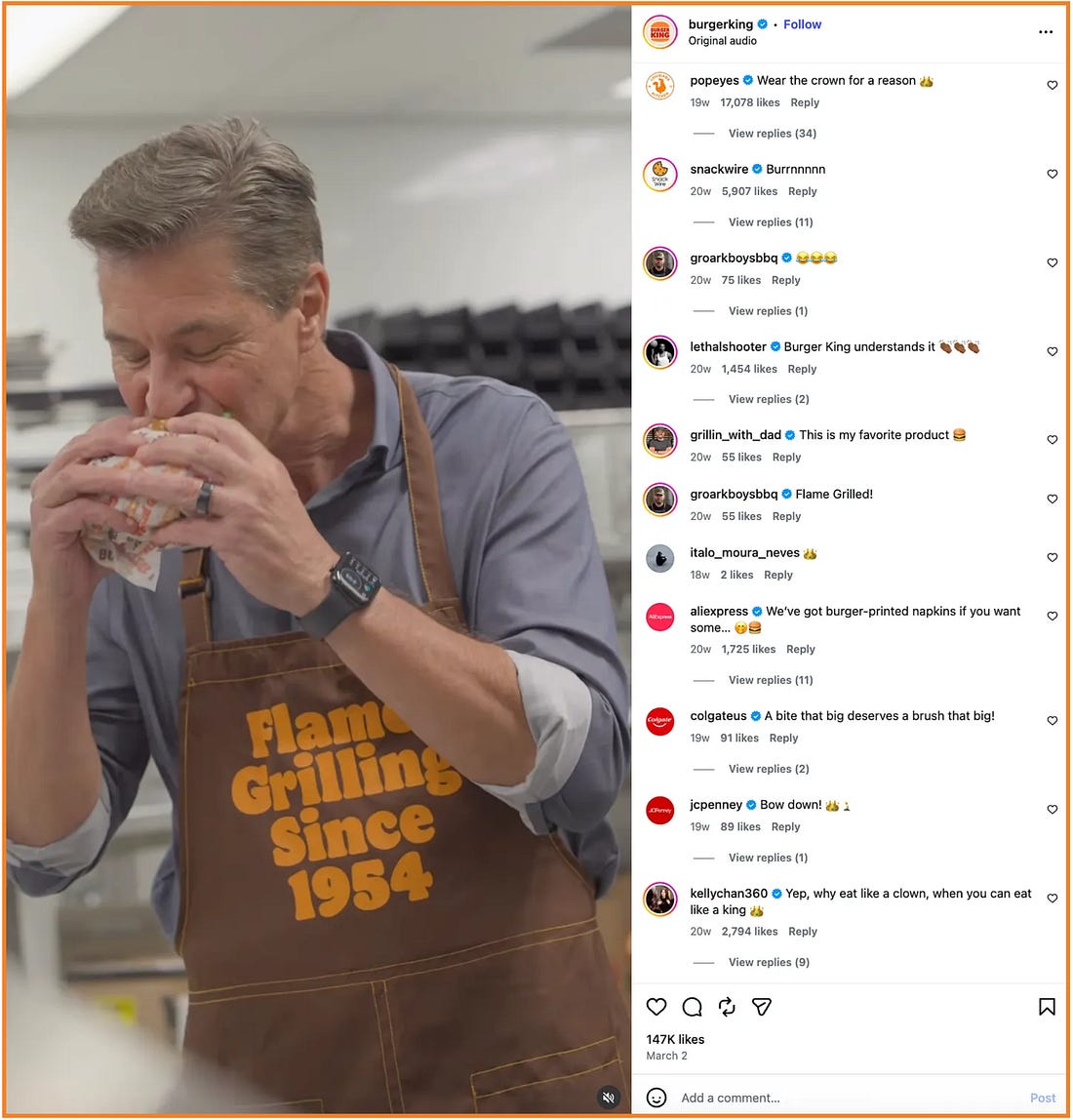
Rachel: And what do you think agencies or teams get wrong when bringing campaigns to life on social media? Mo: I think brand agencies get stuck on a “line” or a tightly wound idea that only works for one video, one moment, one script. And social agencies just spray and pray a bunch of unrelated ideas to hope something goes “viral”. Neither is right. You need a brand strategy “Burger King is committed to improving the guest experience” and then tell that in a more episodic way. Each video is a proof point of a larger idea that forms in your head with the culmination of the work. It’s not a line to remember, it’s a personality and a point of view. Rachel: Let’s talk about the bite heard around the world from a competitor’s CEO. You couldn’t have had better timing. Can you describe what that reactive moment looked like on your end? You already had that footage from the campaign, correct? Mo: Yeah, our partners at BarkleyOKRP had already shot this beautiful commercial for the Oscars that included Tom, the president of Burger King. So when the moment happened, and it was time to respond, we didn’t want to invent a joke. We went through the footage and found this real moment of Tom eating a Whopper and posted it. Nothing was staged, he’s really just that guy. He likes Whoppers. And the internet noticed that.
Rachel: What did the numbers look like on that moment? Mo: 3.3B Impressions. 27M+ Views. 4.5M Engagements. +7.2B Earned Impressions. 3rd highest sales week in Burger King history. Rachel: Do you have a process for coming up with reactive social media moments? Can you share any frameworks or brainstorming techniques your agency utilizes? Mo: I think the most important thing is to have a locked brand narrative that you’re trying to convey. And then have a reactive strategy. What kind of stuff do we react to, what do we say, and, most importantly, what kind of stuff do we not react to. We revisit this strategy with our clients often, changing it, shaping it based on which ideas felt true to us and which didn’t. So when the moment comes, everyone in the room is 100% sure of what to reply to and how. Rachel: I’ve loved how this campaign has taken shape on social media in more sustained ways. For example, docu-style guest videos like this one, which are so wholesome and remind me of what I call “Mister Rogers Marketing“. Can you talk to me about this series? Mo: Modern marketing is often trying to show you this fantastical reality. But Burger King is real. It’s part of real American families. People have real stories and emotions about this brand. You’ve been to BK with your grandpa, or your daughter, or your high school friend. And I think people are looking for that. Something real. Something meaningful. And this is as real as it gets. Real guests with real stories about their Burger King. So instead of cinematic scripted series, we decided to shoot it like a local documentary.
Rachel: What’s been cool to see is how product-focused the virality is. I see a viral video, and then on Reddit people are actually sharing the new burger recipe and showing that improvements are being made. How do you think about the overall ecosystem you’re creating on social media? And that some of the most impactful posts aren’t going to even come from the brand account? Mo: Marketing used to be the art of telling a story to your audience. Now it’s the art of you and your fans creating a story together. The fans told Burger King that the Whopper was often smushed. That’s why, amongst many other improvements, the Whopper now comes in a box. You can’t have that two way conversation without listening. It’s funny. Every marketing department in the world is in a board room trying to figure out how to get people talking. And the answer is so dumb simple…listen. If you actually listen, your closest fans will tell you what they’re interested in. And then go do that. If you do, they’ll go crazy for you.
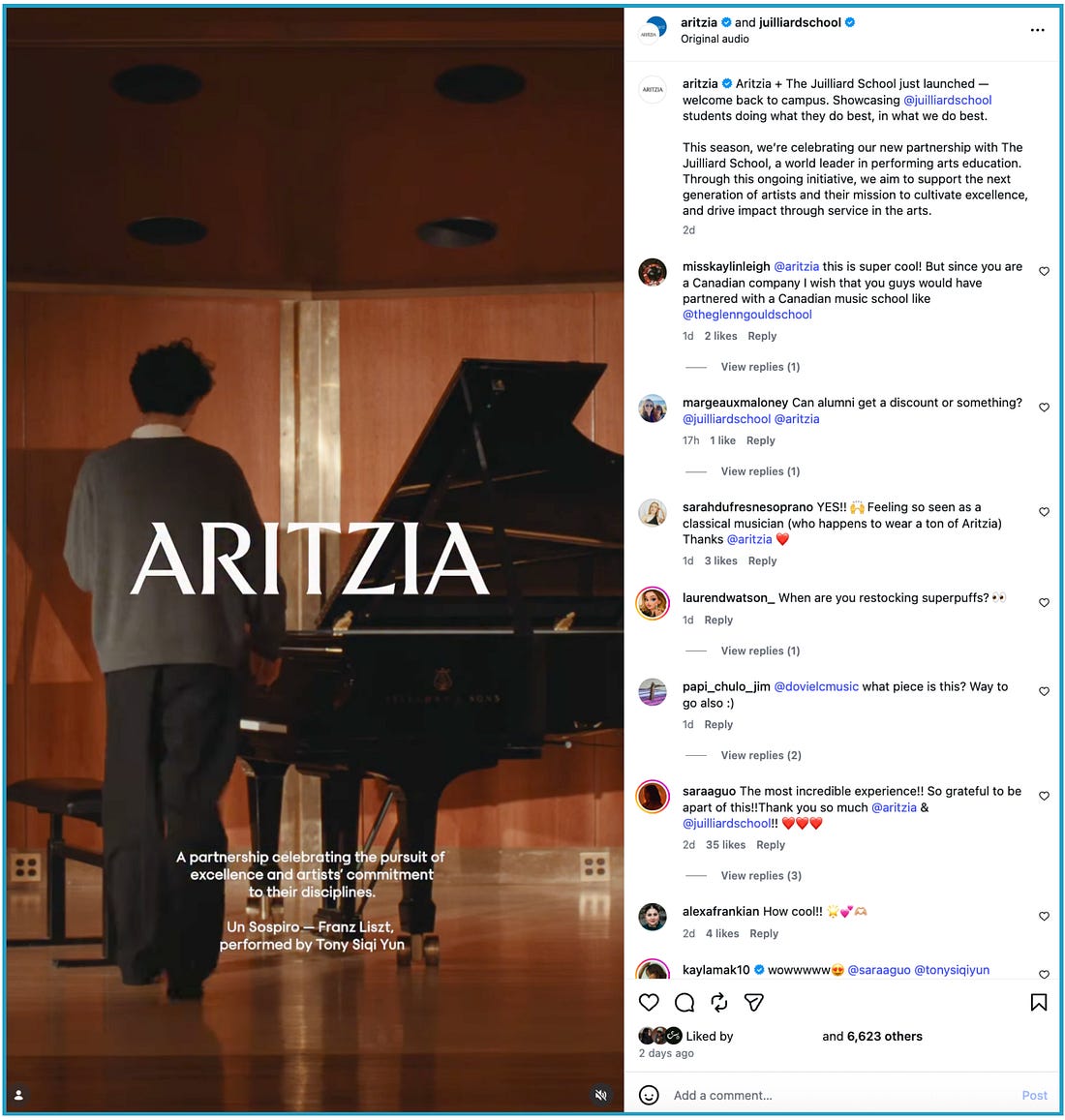
Rachel: Let’s go broad. What is the hardest part about working in social media right now? Mo: I think the most interesting thing is that people are coming at it from these two worlds. The careful, considered, strategized, planned, gun-shy, precious social media world. And then there’s this spray and pray, gamified, quick joke, trigger hungry, almost needy social media world. The best work today has the best parts of both. And there’s just not that many people in the world who think like that. So the hardest part is finding talent. Rachel: Look into your crystal ball. What does the future of social media look like? Mo: You don’t have to look into a crystal ball. You can just look at my 14-year-old nephew’s attention habits. It’s YouTube. It’s reading. In five years that kid is 19. In ten years he’s 24. So I’d bet on YouTube. Substack. Gaming. More considered. More creative. More craft. And in the world of AI, where everyone is suddenly an artist. The real artists. The real creatives. They’re going to be the ones that will really resonate. What I’m scrolling@SpotifyNews rebranded to @ThisIsSpotify. I am intrigued by how these comms-based accounts are pivoting for the entertainment era of social media. More on that in Tuesday’s newsletter. Comedian Mary Beth Barone is promoting her new comedy special with skits about the marketing for it. It’s part of a growing trend of campaigns that make the marketing…the marketing. Like Timothée Chalamet’s Marty Supreme Zoom call and Charli xcx’s press tour bit to promote The Moment. Now when will a brand make fun of the marketing as marketing? Instagram forgot to include the best part of their carousel audio update. If you didn’t ever add music in the first place you can now retroactively select a song for your post. I love Aritzia’s new campaign with Juilliard students. “This season, we’re celebrating our new partnership with The Juilliard School, a world leader in performing arts education. Through this ongoing initiative, we aim to support the next generation of artists and their mission to cultivate excellence, and drive impact through service in the arts.” Very good!
The fake influencers selling wellness on your feed. “The New York Times found hundreds of A.I.-generated doctors, healers and wellness influencers on social media touting the health benefits of supplements to American consumers.” Another stark reminder that just because you’re not getting served AI videos, doesn’t mean they aren’t everywhere on social media right now. Speaking of AI videos, Meta rolled out a very “optimistic” AI campaign today. I couldn’t help myself and left a comment. Here’s what I wrote: “generative ai images and videos are going to be the reason people leave this platform in droves. we’ll all remember this video when it happens. it causes people to approach all posts (ai or not) with skepticism. they do not believe what they see! that is bad for your business! engagement numbers are not enjoyment numbers. and to be clear, i love instagram and care deeply about the future of it! but i have yet to see ai make the improvements this ad promises.” There are new roles on the Link in Bio Job Board. Check out the latest from Sphere, Microsoft, and Fielding here. Thanks so much for reading. If you enjoy free interviews like this one, you can upgrade to a paid Link in Bio subscription. You’ll get weekly strategy newsletters and quarterly trend reports, along with access to the Discord community. If you’re already a paid subscriber, thank you for making this newsletter possible! Interested in partnering with Link in Bio? Email rachelkartengroup@caa.com for more details. You’re currently a free subscriber to Link in Bio. For the full experience, upgrade your subscription.
|